Trace the journey with luggage
Before comparing suitcases, write down each transfer: home to station, platform to train, arrival to local transport, then the walk to the room. Note where you expect stairs, uneven paving or a long walk. A bag that rolls easily through an airport may feel less convenient across several blocks of rough pavement. A backpack avoids wheels but places the load on your body.
Use the journey you have booked, not the ideal version of it. If you cannot confirm step-free access at a connection, do not assume someone will be available to carry a heavy case. When accessibility is important, verify the route directly with the transport operator and choose luggage that fits the assistance and handling arrangements you actually have.
Compare three forms of effort
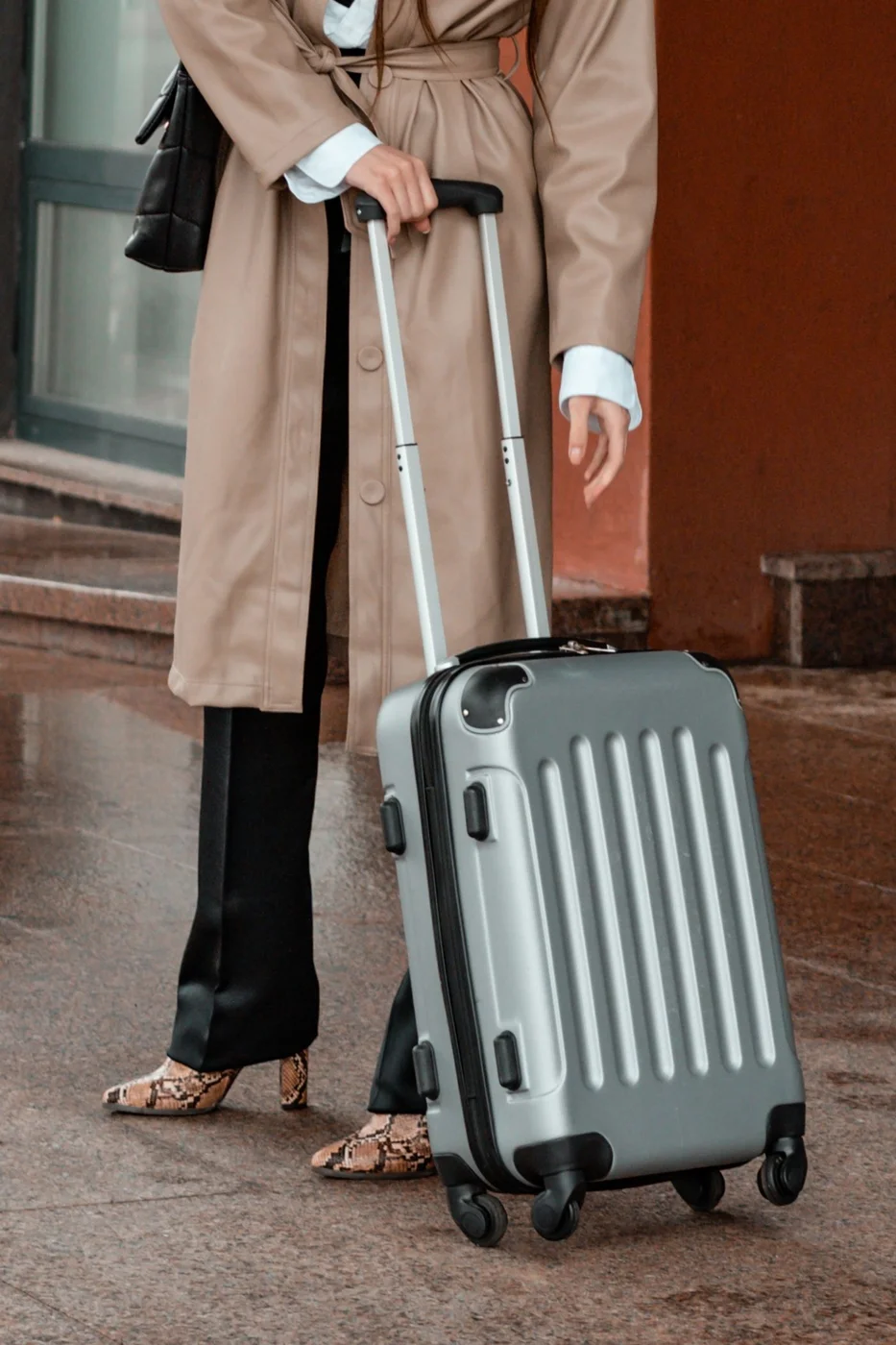
A wheeled case reduces carrying on smooth surfaces but must still be lifted at stairs, curbs and storage spaces. Check the empty weight and whether you can hold the loaded case by its handle without struggling. Small wheels and a rigid shell may respond differently to broken paving than they do to a showroom floor.
A backpack keeps your hands freer and can be easier through stairs, but comfort depends on fit and weight distribution. Try it with a realistic load. The straps should work for your body, and the bag should not pull you backward or require constant adjustment. A fashionable shape is not evidence of comfortable carrying.
A soft duffel can be easy to place in a car and flexible in limited storage, but a single shoulder strap may become tiring over a long transfer. It suits a different journey from a day of rail connections. If the hotel is a short walk from parking, that tradeoff may be entirely reasonable.
Check the packed dimensions
Read the carrier's rules for your ticket. Include handles, wheels and bulging pockets when measuring. Expansion zips add capacity but can move the bag beyond the size you planned around. Check weight limits too, where applicable. There is little benefit in buying a bag that meets the dimensional rule but is too heavy once packed.
Consider how the bag opens in a small room. A case that splits into two large halves may occupy most of the available floor space. A top-opening design or smaller soft bag may be easier if you expect to keep it packed. This matters more on a short stay when unpacking into drawers may not be worth the time.
Buy for the ordinary journey
Do not choose a large bag solely for the occasional exceptional trip. For a two-night break, comfortable movement and easy access can matter more than extra capacity. Equally, do not force a very small bag if it creates an awkward second load or leaves no room for the clothing your itinerary requires.
Test the zips, handles and wheels before departure, and put identification where it is useful without displaying unnecessary personal details. Keep essentials accessible under your operator's rules in case a bag has to be stored separately. The right luggage is the piece that makes the transfers routine enough to stop thinking about it.